
Do you support Co-Governance in the Taranaki Region, with multi million dollar payments from Ratepayers for Iwi and Hapu to participate ?
Do you support Co-Governance of the Taranaki region ? Co-Governance of rivers, lakes, streams, forests, coastline, resource consenting, including arrangements relating to functions, duties or enforcement under the Resource Management Act ?
Do you support multi million dollar payments from Ratepayers for Iwi and Hapu to participate in Co-Governance of the Taranaki Region ?
- If you don’t, you have a short time to write to your Mayor, Councillors and MP’s to ask them to carefully consider what is written in to the contracts being created, and to tell them to take the full 18 months available, to fully assess the costs and community impacts of these contracts, and to assess what is required by law, and what additional options are being added.
- Voting to approve, or delay, a Central North Island Co-Governance contract will take place at the NPDC within the next few weeks.
We know some do not like the word Co-Governance being used. “Partnership, co-management and co-design” are more recent words used – but whatever way it is put – the intention is Co-Governing with Local Authorities across NZ.
We have a summary of what this is about further down the page:
- There are 2 media video links with an explanation, or,
- There is a bullet point version of what is happening, so scroll down, read the summary, then scroll to the end of the story for what you can do next.
We know this is going to be a very controversial story. We know when people attempt to have a conversation around this topic they get labelled with all sorts of nasty names. We are making a genuine attempt here to present the facts of what is happening with Central and Local government and how legislation has been written that now affects, and changes, the future of every single person in this country.
There is also little detail surrounding the reality of what these contracts will cost to deliver, which is our biggest concern for Ratepayers and Renters in Taranaki.
- We are also sharing this story as we are getting very tired of documents we see stating things that are just not true.
An example is an April agenda where the Taranaki Regional Council elected officials discussed a Co-Governance agreement. That agreement has since been signed. The agenda in April had the following statement in the section called community considerations:
- "35. Community considerations
- This memorandum and the associated recommendations have considered the views of the community, interested and affected parties and those views have been recognised in the preparation of this memorandum."
- This may be a new term the TRC is using for community consultation ?
It is fairly obvious to the Ratepayers Alliance that absolutely zero views have been considered by ratepayers and renters in New Plymouth, who pay rates to the TRC, as there has been absolutely no mention of any of this activity made directly to ratepayers or renters.
- The only reason the Alliance knew this contract existed was because a supporter of ours was looking at other items on the TRC website and sent this agenda to us.
Please share this story with everyone you know, including friends and family in Stratford and Hawera, where the same contracts will be signed as in New Plymouth. These contracts are being developed across the entire country, so please send on to people you know across NZ.
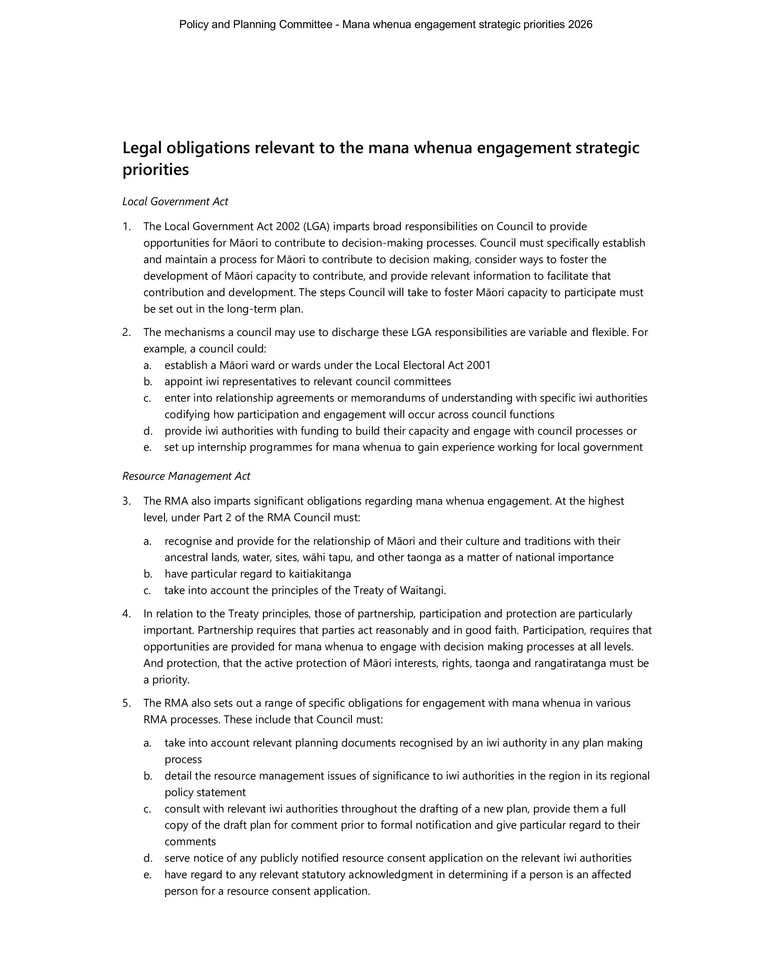
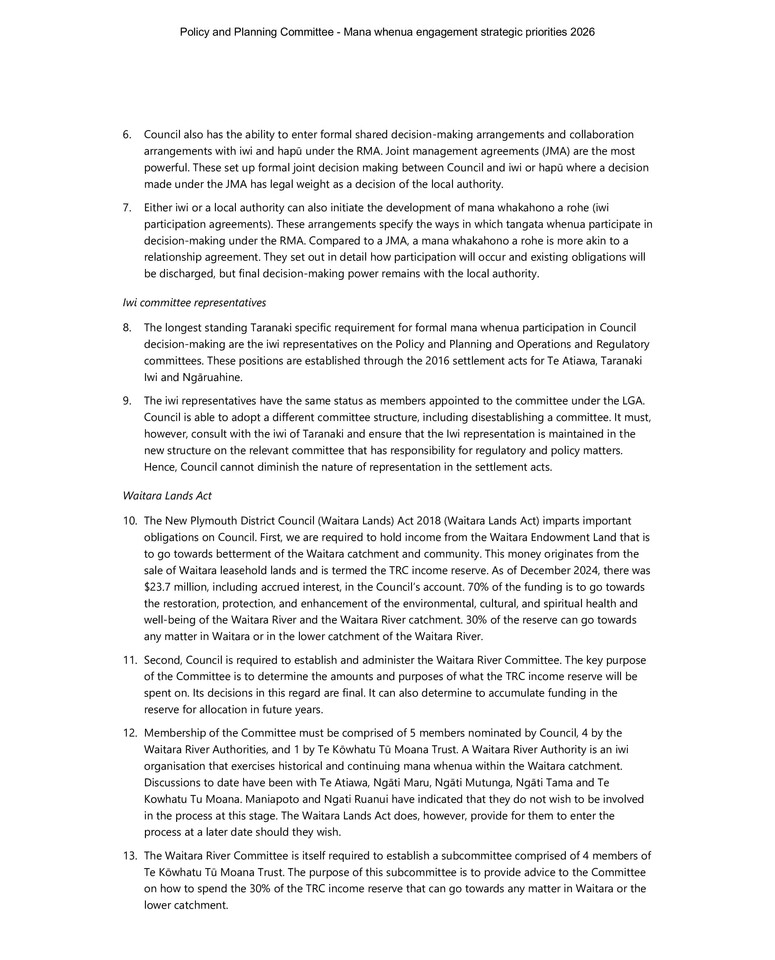
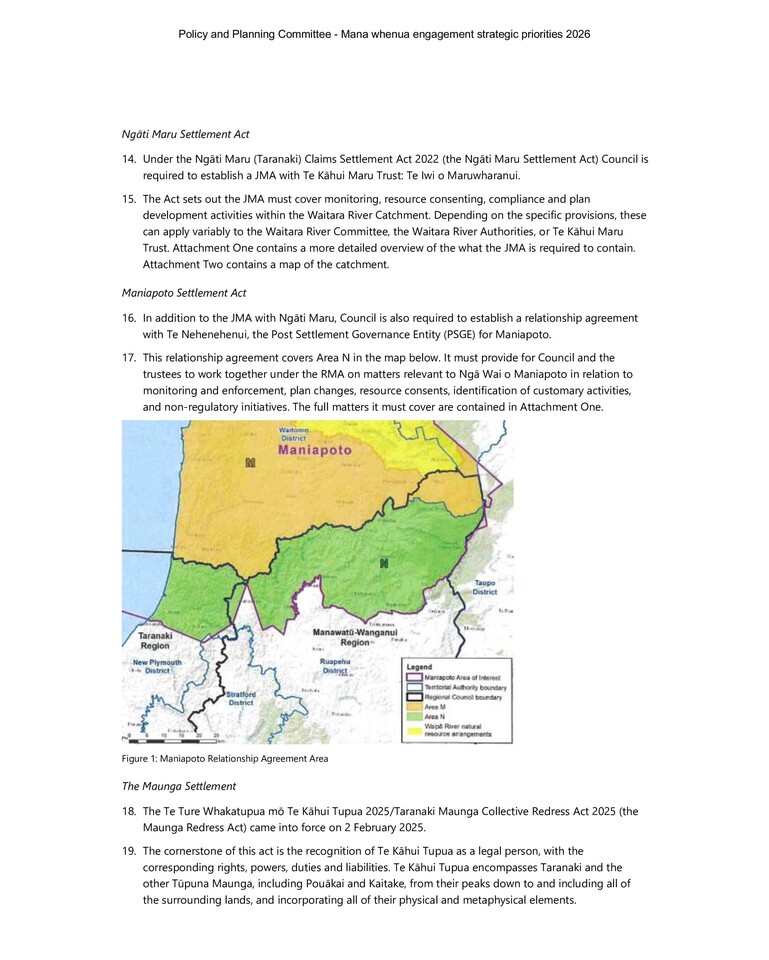
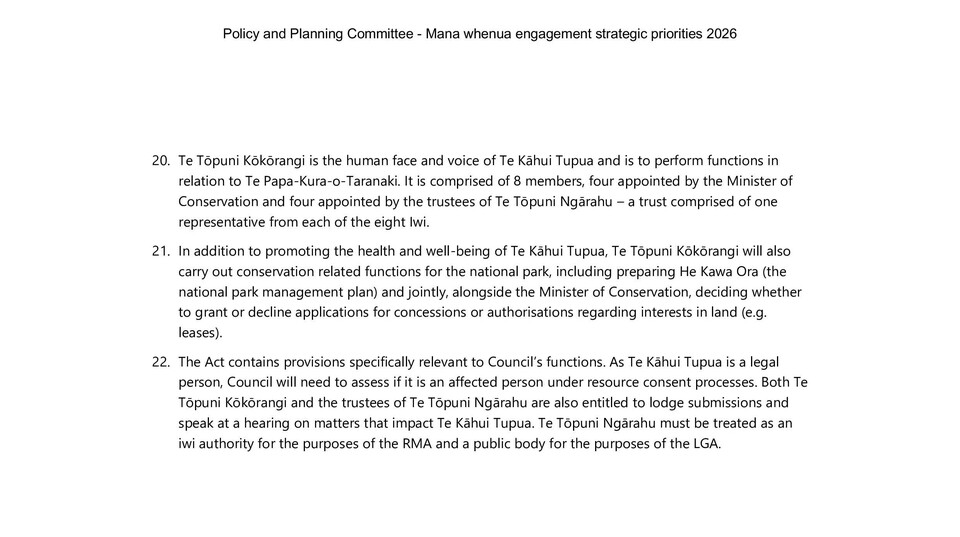
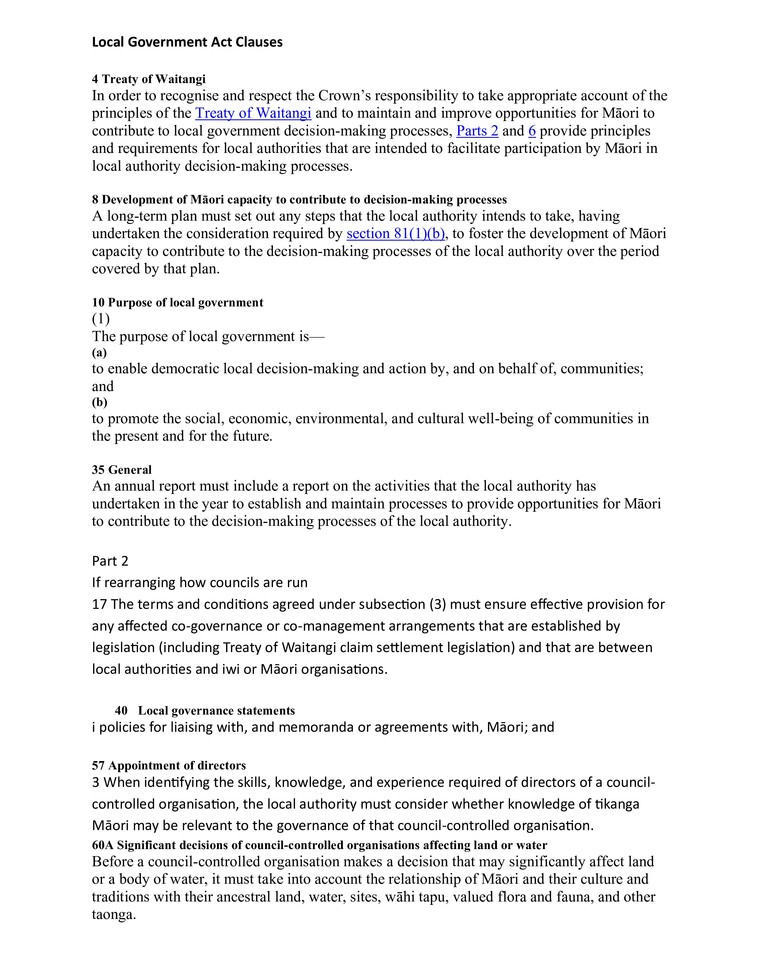
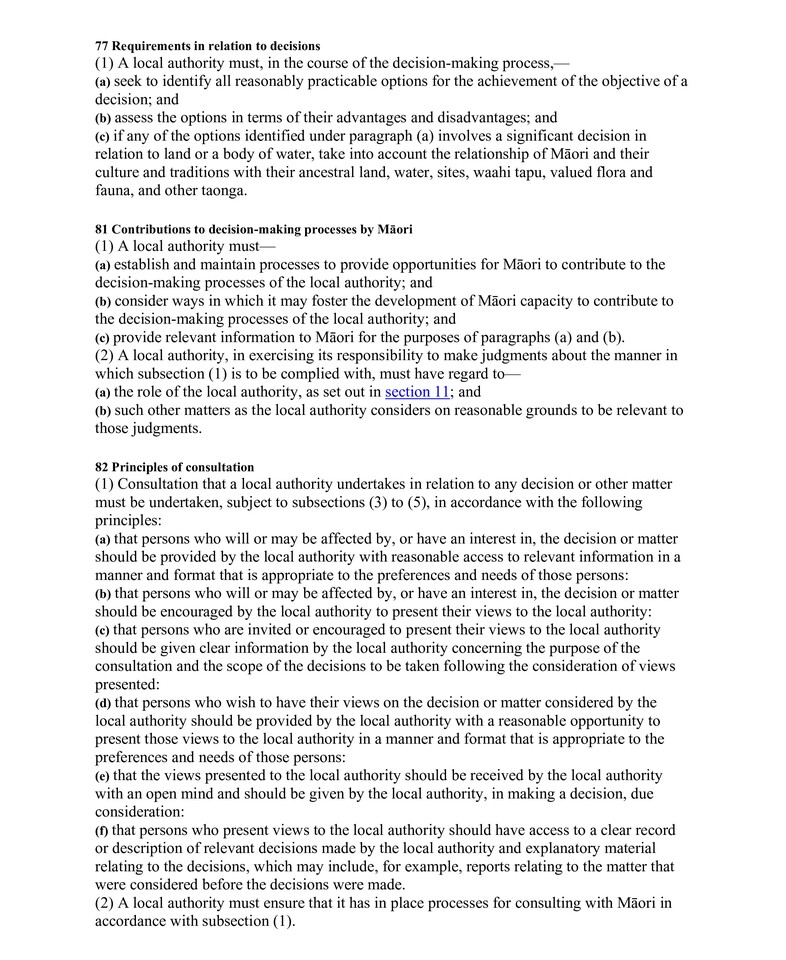
We need to put some context around what is happening at the NPDC and the TRC and the large amount of legislation that has been created by central government over the last few decades. (We have attached 4 pages of legislation referred to in the agenda for the TRC contract).
People keep saying it doesn’t matter whether I vote for National or Labour they all keep implementing the same policies and they don’t undo policies that people do not want. Since the 1990’s both Labour and National have advanced the Te Tiriti worldview. There has been very little consultation with the changes that have been made.
The framework of our nation has been progressively altered by multiple political parties without the consent or knowledge of most people who vote.
The framework the central government has put in place is now playing out in our Regional and District Councils across the country, with contracts and documents that are binding, can’t be stopped without both parties agreeing, and they will be extremely costly for both taxpayers and ratepayers once they are implemented.
- For people who prefer a video summary – we have included a link to 2 interviews:
The first with a Manawatu Councillor explaining what is happening with the contracts that will be voted on for the Central North Island – Including all of Taranaki.
https://www.youtube.com/watch?v=9-bPCJui50M
The second with a councillor explaining what is happening in the Far North with contracts in that region:
A summary of what this is about:
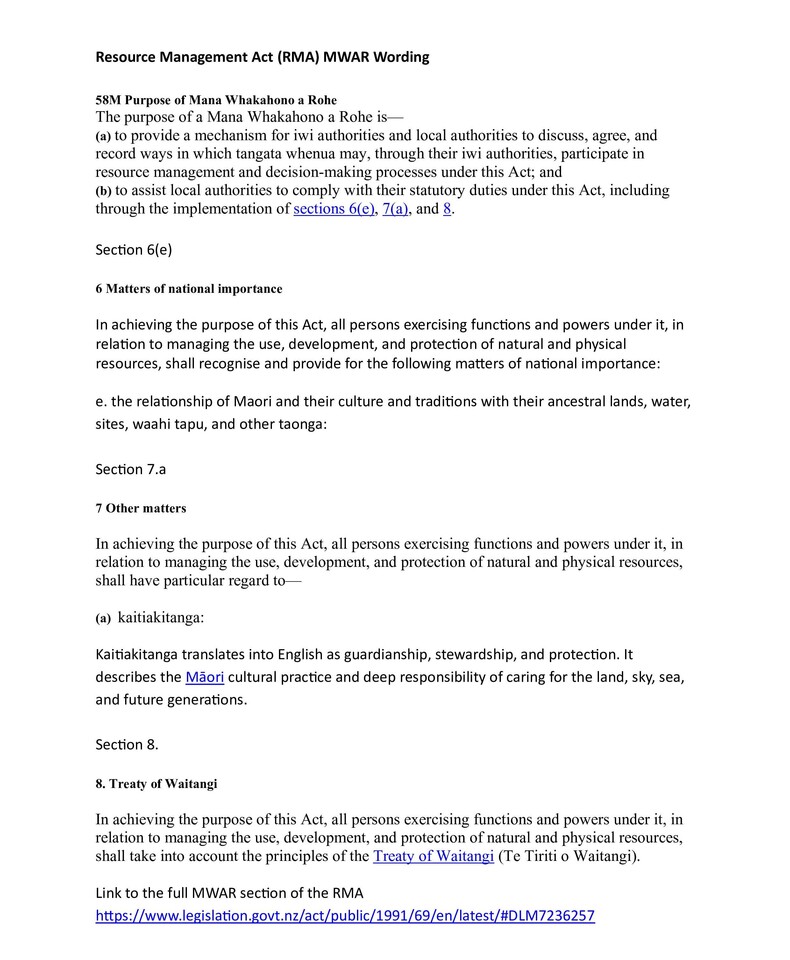
- The Resource Management Act (RMA) had a section added by the Labour Government in 2017 called Mana Whakahono a Rohe (MWAR). There is a link to the full wording in the RMA at the end of the story.
- This is the actual wording in the RMA. An MWAR “provides a mechanism for iwi authorities and local authorities to discuss, agree, and record ways in which tangata whenua may, through their iwi authorities, participate in resource management and decision-making processes under this Act”.
- Once an iwi authority requests for an MWAR contract discussion to be initiated, a local authority has 18 months for a contract to be in place.
- The Coalition Government have indicated that the RMA will be changing in 2026 and MWAR’s may not be possible to create after the 2026 election.
- The TRC has been instrumental in getting MWAR discussions underway with Iwi in Taranaki before the election.
- There are Central North Island contracts under discussion covering all of Taranaki, Ruapehu and Manawatu. These contracts cover co-governance of streams, lakes, rivers, coastline, resource consenting including arrangements relating to functions, duties, approval and enforcement.
- There are 9 Iwi in Taranaki, who will each require an MWAR contract. One of these Iwi will be the “person” who is the mountain. Discussions have stated the logistics of how this will work will need to be defined.
- There are Iwi in the Ruapehu district included with these contracts.
- There are 14 Iwi in Manawatu who will require a contract. A Manawatu Councillor has spoken publicly that these contracts cost around $350k each to just produce the paperwork.
- Costs to operate the contract will be on top of this.
- In April a Draft Te Tiriti Framework workshop was run at the NPDC for Councillors to understand legal obligations for Iwi and Hapu in NZ law.
- A workshop was also held with the NPDC in June about the MWAR and contracts that the TRC and NPDC Staff would like all elected officials at Taranaki Councils to Sign – NPDC, Stratford, South Taranaki and TRC.
- The TRC elected officials have signed one Iwi contract.
- These contracts do not have a budget of ongoing costs and specifics of what will be paid to uphold the contracts once they are implemented. Ratepayers are being exposed to a completely unknown range of costs. Plans state that costs and detailed budgets will be identified after a contract has been signed.
- Contracts are open ended, a clause stating that there will be continual review and additions is included in the NPDC contract currently under discussion.
- Wording is not overly specific with exactly what obligations are being made – what will be included – and what will be left out.
- As well as MWAR’s the NPDC is also working on a Te Tiriti Framework for the Council to follow. This has plans and aspirations for Iwi and Hapu in New Plymouth. (A link to the NPDC Te Titriti workshop agenda is in Part Two of this story). Costs to operate this plan are included in Long Term Plans (LTP’s). Millions of dollars are allocated in LTP’s and new costs for this will be requested for the 2027 LTP. Around $21M in New Plymouth has been identified in just 2 documents we have seen while looking in to this story.
The Alliance has done a significant amount of research about the Draft Te Tiriti Framework being proposed for the NPDC and also the MWAR contracts. We have studied the Local Government Act 2002 (LGA) and the Resource Management Act 1991 (RMA) referred to in workshops at the NPDC.
We have attached 2 documents where we have “cut and paste” clauses mentioning responsibilities local government have for Iwi, Hapu and Maori. There is a document attached for the LGA and a document attached with the MWAR legislation. There are more clauses in the Resource Management Act, and our findings were all the same.
There is very specific mention that Iwi and Hapu must be consulted, they must be listened to, they must be taken seriously and the issues they raise must be seriously considered, BUT
- The Alliance has noted in all the legislation we are able to see** it does not state that Iwi or Hapu, or any other Maori organisation HAS to be paid or compensated for any activity they undertake to provide input and feedback to a Council.
- And nowhere in this legislation does it state that Co-Governing of any of our towns and cities is a REQUIREMENT of any legislation.
- A number of requirements are mentioned in NZ legislation, but paying Iwi and Hapu, or offering a Co-Governing option is something that the people who work at our Councils are building in to contracts and processes at the Council**, and asking our elected officials to agree to.
- It is NOT something that the NZ Government has openly legislated that has to be done.
**The Alliance notes that Treaty Settlements are not public documents so the community is not made aware of what arrangements may have been made with these documents. There may be some specifics in treaty settlements that grant special arrangements and payments to Iwi and Hapu – but our elected officials do not educate the community on what any of these arrangements may be. The ratepayers – and by association renters – of New Plymouth pay for all and any of these arrangements, but they are not told what they have been signed up for.
We did find one clause in the Local Government Act (LGA) which mentions co-governance or co-management arrangements in Treaty Settlements, but the public has never been involved in the detail of what has been agreed with settlement treaties. This is the clause in the Local Government Act:
“(3) The Commission must not adopt a reorganisation plan under this clause that affects the application of any Act that establishes co-governance or co-management arrangements between local authorities and iwi or Māori organisations (including Treaty of Waitangi claim settlement legislation), without first consulting all iwi or Māori organisations to whom that Act applies, the Attorney-General, and the Minister for Treaty of Waitangi Negotiations.”
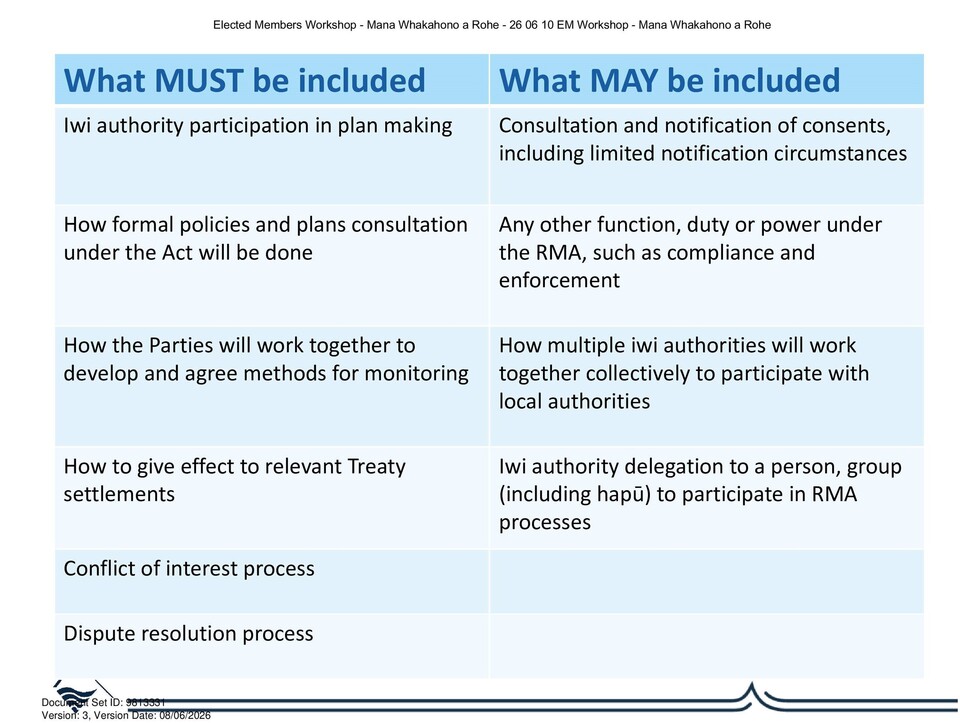
We have attached a page from an NPDC workshop agenda which states what MUST be in the MWAR contracts in the left column and what CAN be in the MWAR contracts in the right column.
- The contracts being presented to the NPDC and TRC include multiple items which DO NOT have to be provided by law.
Wording in the TRC agenda for the contract they signed states:
2. The mechanisms a council may use to discharge these Local Government Act (LGA responsibilities) are variable and flexible.
For example, a council could:
a. establish a Māori ward or wards under the Local Electoral Act 2001
b. appoint iwi representatives to relevant council committees
c. enter into relationship agreements or memorandums of understanding with specific iwi authorities codifying how participation and engagement will occur across council functions
d. provide iwi authorities with funding to build their capacity and engage with council processes, or
e. set up internship programmes for mana whenua to gain experience working for local government
- Only one of these options mentions an option of payment
The Alliance does not support any additional clauses offering more to Iwi and Hapu than NZ legislation allows for.
- If clauses are included in any MWAR’s, that are over and above what the law states MUST be provided, then THIS HAS TO BE CONSULTED ON with the rest of the community, as they will be the people paying for the considerable costs to implement non legislated activities.
If that is enough information for you to understand the concerns the Alliance has with these MWAR contracts, you can skip to the end to find out how you can quickly e-mail NPDC elected officials, and MP’s, with some options of what you may like to say to them.
- The community can’t stop a contract being written, but they CAN INFLUENCE what is put in these contracts. Your elected officials CAN’T vote on your behalf if you don’t TELL THEM LOUD AND CLEAR what you want them to do.
If you want to know more, the Alliance has more concerns about costs, just from a few examples we can find of how costs add up with contracts and resource consent payments to Iwi.
What are some examples of the costs to run contracts with Iwi and Hapu in NZ ?
The TRC contract has this wording relating to $15M of expenditure in the one contract they have signed. They consider $15M to be “not significant”.:
"Significance 29.
This decision is assessed as not significant with regards to the Significance and Engagement Policy. It will not have a significant impact on levels of service, incur more than $10,000,000 budgeted or $5,000,000 of unbudgeted expenditure, or involve the transfer of ownership or control of a strategic asset. More broadly, the proposed strategic priorities reflect either matters already consulted on in the 2024-34 long term plan, or giving effect to known legislative obligations."
The 2024 – to 2034 LTP has $6M left in the 10 year budget allocated for Iwi aspirations.
The draft Te Tiriti plan is to feed in to the 2027 – 2037 LTP and will request more money for aspirations.
Media coverage in New Plymouth discussed the Puketapu Hapu Service Level Agreement (SLA) of $1M to be paid to the Hapu for one project.
One of our supporters did an OIA to the NPDC about SLA’s and were told there are so many SLA’s at the NPDC they could not get a reply without specifying which SLA they wanted to know about.
- Are all of these SLA’s $1M each ?
- Does every project the Council runs have an SLA agreement ?
- We don’t know because it is very hard to get any actual detail around the true costs to run our Local Government.
We know Iwi and Hapu representatives are paid for their involvement with some contracts, and consent approvals.
We are aware of local contracts and regional contracts – an example being Mt Messenger. A common payment rate is $120 an hour, plus travel. We have been told of 2 full time Iwi observers working on Mount Messenger invoicing their time at just under $40,000 per month.
There have been some recent examples in the media around granting resource consents in NZ:
The Timaru Herald reported on how Meridian Energy (owned by the NZ Government) is not revealing the amount it paid to Ngai Tahu as it seeks to renew resource consents for its Waitaki Hydro Power Scheme. Financial Settlements were also made to the Department of Conservation and Central South Island Fish and Game with these resource consents.
The NZ Centre for Political Research wrote a story about this Meridian resource consent on their Facebook page and made the statement - “a figure of $180m had been published as the amount paid to Ngāi Tahu hapū and other parties by Meridian and Genesis”.
Another story featuring Contact Energy states the Pirirākau Tribal Authority has signed a historic relationship agreement with Contact Energy, locking in free electricity for four local marae for the next 35 years. This deal “establishes an enduring partnership centered on the health of the Wairoa Awa and reinforces Pirirākau’s foundational role as kaitiaki. This story is here:
https://aukaha.news/tauranga/landmark-35-year-energy-deal-secured-for-pirirakau-marae/
Another story in the media relates to the expansion of the Tauranga Port.
In this story, “Iwi are seeking significant compensation if the proposal is approved, amounting to at least $19 million a year with a 35-year present value of between $335m and $475m.”
The Tauranga Port has offered $6.1m in compensation and cultural mitigation for the development. This story is here:
https://www.farmersweekly.co.nz/news/port-of-tauranga-extension-divides-stakeholders/
Any costs involved for companies to receive an approved resource consent are passed on to the consumers of those companies. In just these 3 examples in NZ, costs to the power company customers, and freight charges across the country increase in direct relation to the additional costs to grant the consents.
- The significance of the additional costs to run our country, with changes to the resource consent approval process, are enormous.
The Local Government Act 2002 clearly states that Local Government must look after ALL of the community –
10 Purpose of local government
(1) The purpose of local government is—
(a) to enable democratic local decision-making and action by, and on behalf of, communities; and
(b) to promote the social, economic, environmental, and cultural well-being of communities in the present and for the future.
- The Alliance wants our elected officials to carefully consider what is provided in any of these MWAR contracts so the rest of the community can still afford to live, and, pay rates and rents.
- If you are not happy about this you have to take action. Councillors DO have to agree to create an arrangement of consultation with Iwi and Hapu, but they DO NOT have to agree to Co-Governance, an open cheque book, or arrangements which are not required by law.
The legislation states that Iwi must be involved in the process – but it does not state they must be paid, or have special compensation, before a resource consent can be approved.
- There is so little detail included in the contracts being presented to the elected officials at the NPDC, and with examples of costs being built in elsewhere in NZ with Iwi and Hapu contracts, the Alliance is urging our elected officials to take the full amount of time available to consider what is included in these contracts.
- We strongly believe that NO contracts should be signed without detailed budgets, clearly stating what Ratepayers will be required to pay for the operation of these contracts, and, budgets MUST have an absolute ceiling of what total payments ratepayers will be liable for.
- Any budget included in the LTP has to be a proportionate amount with overall ratepayer spending.
- There also needs to be an analysis of what services the city will need to reduce to find the money needed to make any payments required to Iwi and Hapu. The community MUST be consulted on with what services they will need to go without before any payments are agreed to and MWAR contracts are signed.
Write to your councillors and tell them what you want them to do. You may say things like:
You have 18 months to consider MAWR contracts, take the full 18 months and make sure detailed budgets are prepared so ratepayers are aware what additional costs will be required in their rates invoices.
I do not support Co-Governance of New Plymouth, or Taranaki, and I do not agree with Co-Governance being signed in any MWAR contracts.
I do not support this in any way, and want you to wait until the new RMA has been confirmed before voting on this.
I do not support unlimited budget for MAWR implementation. Contracts must include a cap on maximum spend.
It does not state in legislation that Iwi and Hapu have to be paid – just consulted – so I do not agree with any budget being set aside to pay Maori to implement MWAR contracts or for involvement with resource consents.
I am concerned about what Council services I will have to go without because additional costs will be paid to Iwi and Hapu for MWAR contracts and resource consent approvals.
- If you do send an email to the NPDC, or MP’s, please SEND A COPY TO US at the same time, so we have an idea how many of our community are concerned about these contracts.
Copy and paste these Email Addresses into a new Email for the NPDC Elected Officials:
Copy and Paste these Email addresses into a new Email for MP’s
New Plymouth MP
David.MacLeod@parliament.govt.nz
Local Government Minister
Simon.Watts@parliament.govt.nz
Chris Bishop – MP and Resource Management Act changes
chris.bishop@parliament.govt.nz
Christopher Luxon – Prime Minister
christopher.luxon@parliament.govt.nz
David Seymour – Current Deputy Prime Minister
david.seymour@parliament.govt.nz
Winston Peters – Foreign Affairs Minister
winston.peters@parliament.govt.nz
There is a Part Two for this story for people who like all the detail. This will be uploaded in a few days. This will have links to:
- The full MWAR wording in the RMA
- The full agenda for the Te Tiriti Outcomes workshop
- The link to the NPDC MWAR contract to be discussed
- The link to the TRC MWAR contract which has been signed
- An explanation of Te Tiriti and kaitiakitanga meanings
- An explanation of how the United Nations Right of Indigenous Peoples came about in NZ, and a link to the document.
Posted: 19 Jul 2026